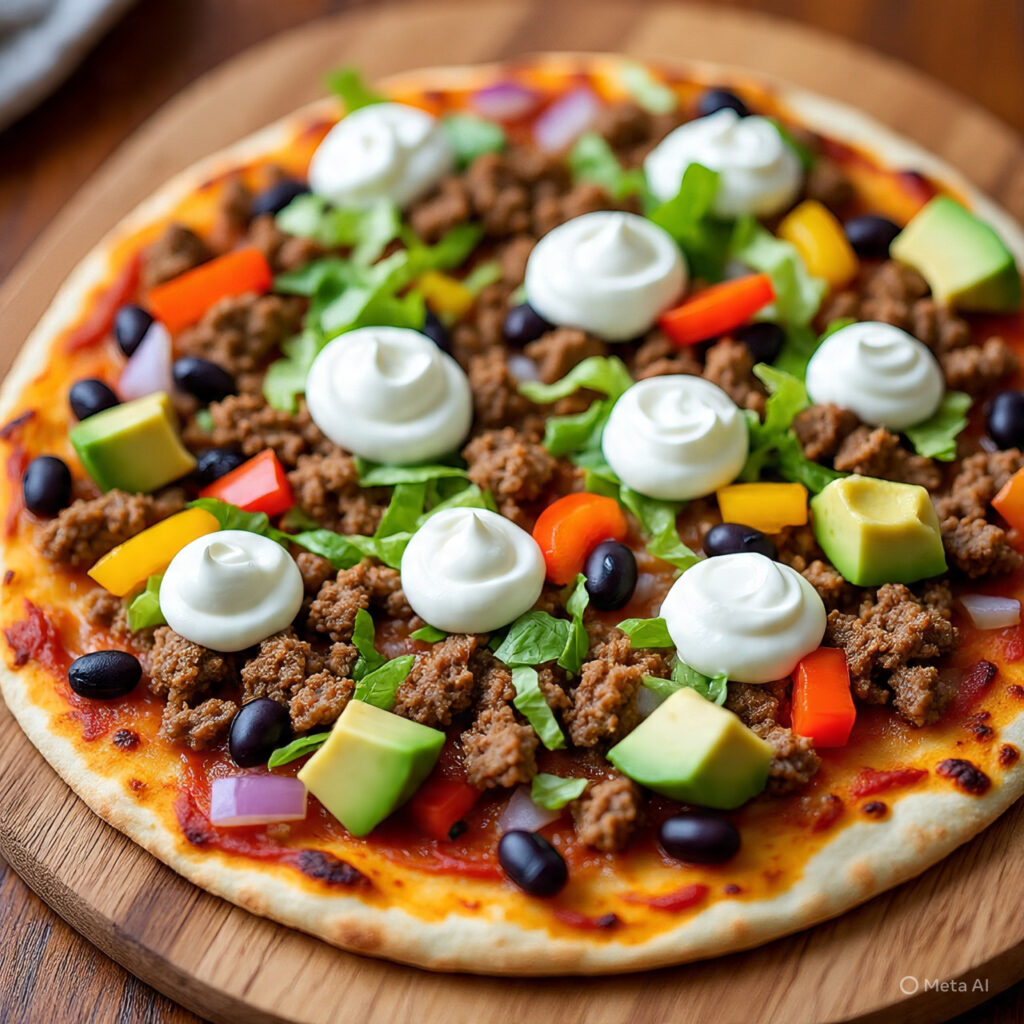

High-Protein Taco Pizza: A Healthy Twist on a Classic Favorite
If you love tacos and pizza, imagine combining the two into one flavor-packed, protein-rich meal. Taco pizza is a fun and versatile dish, but traditional versions can be high in carbs, fats, and low in protein.
With a few smart modifications, you can enjoy a high-protein taco pizza that’s satisfying, nutritious, and perfect for lunch, dinner, or even meal prep. In this guide, we’ll show you how to make a delicious high-protein taco pizza from scratch, including ingredients, step-by-step instructions, nutrition tips, and creative variations.
Why Make a High-Protein Taco Pizza?
Protein is essential for:
- Muscle repair and growth
- Satiety and weight management
- Maintaining stable energy levels
A high-protein taco pizza allows you to:
- Boost protein intake without relying on traditional high-carb pizza bases.
- Enjoy a flavorful meal while staying aligned with fitness goals.
- Incorporate healthy ingredients, such as lean meats, Greek yogurt, and whole-grain or low-carb crusts.
This recipe combines the best of both worlds: the flavor and fun of taco night with the nutritional benefits of a protein-focused meal.
Ingredients for High-Protein Taco Pizza
For the Crust
- 1 1/2 cups almond flour (for low-carb/high-protein option)
- 1/2 cup cottage cheese or Greek yogurt
- 2 large eggs
- 1 tsp baking powder
- 1/4 tsp salt
- Optional: 1 scoop unflavored or savory protein powder for extra protein
For the Taco Meat Topping
- 1 lb (450g) lean ground turkey or chicken
- 1 tsp olive oil
- 1 tbsp taco seasoning (or homemade: chili powder, cumin, paprika, garlic powder, onion powder, cayenne)
- 1/2 tsp salt
For the Cheese and Sauce
- 1/2 cup shredded part-skim mozzarella
- 1/2 cup shredded cheddar cheese
- 2–3 tbsp Greek yogurt (as a creamy “sour cream” topping)
Optional Toppings
- Chopped lettuce
- Diced tomatoes
- Sliced black olives
- Sliced jalapeños
- Fresh cilantro
- Salsa or guacamole
Pro Tip: Using Greek yogurt instead of sour cream reduces fat while adding protein, making it a perfect topping for a high-protein pizza.
Step-by-Step Instructions
Step 1: Preheat Oven
- Preheat your oven to 375°F (190°C).
- Line a baking sheet with parchment paper or lightly grease a pizza pan.
Step 2: Prepare the High-Protein Crust
- In a medium bowl, mix almond flour, baking powder, and salt.
- Add cottage cheese (or Greek yogurt) and eggs. Mix until a dough forms.
- If desired, fold in protein powder to increase protein content.
- Spread the dough onto the baking sheet or pan, forming a round or rectangular pizza crust about 1/4–1/2 inch thick.
Tip: Use a spatula or wet hands to smooth the dough evenly.
Step 3: Pre-Bake the Crust
- Bake the crust for 10–12 minutes, until it starts to firm up and lightly golden.
- This ensures a sturdy base for your taco toppings.
Step 4: Cook the Taco Meat
- Heat olive oil in a skillet over medium heat.
- Add ground turkey or chicken and cook until browned (5–7 minutes).
- Stir in taco seasoning and salt, cooking for another 2–3 minutes.
- Remove from heat and set aside.
Tip: Drain excess fat if necessary, especially when using higher-fat ground meats.
Step 5: Assemble the Taco Pizza
- Spread a thin layer of Greek yogurt over the pre-baked crust.
- Evenly distribute the cooked taco meat over the crust.
- Sprinkle shredded mozzarella and cheddar cheese on top.
Optional: Add some diced tomatoes or olives before baking.
Step 6: Bake the Pizza
- Return the pizza to the oven and bake for 8–10 minutes, until cheese is melted and bubbly.
- Watch closely to prevent burning, especially on a low-carb crust.
Step 7: Add Fresh Toppings
- Once baked, remove from oven and add fresh toppings: chopped lettuce, diced tomatoes, jalapeños, cilantro, or avocado slices.
- Drizzle with extra Greek yogurt or salsa if desired.
Serving Suggestion: Slice into 6–8 portions and serve immediately while warm.
Nutrition Estimate (per slice, 8 slices)
- Calories: ~250 kcal
- Protein: ~20–25g
- Fat: ~12–15g
- Carbs: ~8–10g (mostly from almond flour and toppings)
Note: Macros vary depending on crust type, cheese amount, and additional toppings.
Tips for the Perfect High-Protein Taco Pizza
- Crust Choice Matters: Almond flour crust is low-carb and high-protein. For more protein, add unflavored protein powder.
- Evenly Cook Meat: Brown the meat thoroughly and drain excess fat for a lean topping.
- Pre-Bake Crust: Helps prevent sogginess when adding wet toppings.
- Cheese Distribution: Spread evenly to ensure every bite is cheesy and flavorful.
- Fresh Toppings After Baking: Add lettuce, tomatoes, and avocado after baking to keep them crisp and fresh.
Flavor Variations
1. Spicy Taco Pizza
- Add jalapeños or crushed red pepper to taco meat.
- Drizzle with spicy Greek yogurt sauce for extra heat.
2. Vegetarian High-Protein Taco Pizza
- Replace meat with seasoned black beans or lentils.
- Top with extra Greek yogurt or plant-based cheese.
3. Low-Carb/Keto Taco Pizza
- Use almond flour or coconut flour crust.
- Keep cheese and protein toppings high, skip high-carb toppings like corn.
4. Mediterranean Taco Pizza Twist
- Add feta cheese, olives, and roasted peppers for a Mediterranean flavor while keeping protein high.
5. Meal Prep Taco Pizza
- Bake the pizza, slice, and store in airtight containers in the fridge.
- Reheat in the oven or microwave for a quick high-protein lunch or dinner.
Why This Recipe Works
- Lean Protein: Ground turkey, chicken, or beans provide high-quality protein.
- Greek Yogurt: Replaces sour cream, adds protein, and creates a creamy base.
- Cheese: Part-skim mozzarella and cheddar provide protein, flavor, and a satisfying melt.
- Low-Carb Crust: Almond flour keeps carbs low while adding protein and healthy fats.
- Customizable: You control seasoning, toppings, and portion sizes to suit your diet.
The result is a balanced, flavorful, and satisfying high-protein pizza that tastes indulgent but supports your nutrition goals.
Storage and Meal Prep Tips
- Refrigerate: Store leftover slices in an airtight container for up to 3–4 days.
- Freeze: Wrap slices individually and freeze for up to 2 months. Reheat in the oven for best texture.
- Make Ahead: Prepare the crust and taco meat in advance for a quick assembly dinner.
Tip: Keep fresh toppings separate when meal prepping to maintain crispness.
Serving Suggestions
- Serve with side salad for extra fiber and vitamins.
- Pair with salsa, guacamole, or Greek yogurt drizzle for added flavor.
- Serve as a protein-packed dinner with a glass of milk or protein shake for post-workout nutrition.
Frequently Asked Questions (FAQs)
Q1: Can I make this pizza gluten-free?
Yes! Use almond flour, coconut flour, or a gluten-free pizza crust.
Q2: Can I use other meats?
Ground beef, turkey, or chicken all work. For a vegetarian option, use black beans or lentils.
Q3: Can I make this pizza ahead of time?
Yes, pre-bake the crust and cook the meat. Assemble and bake just before serving.
Q4: How can I increase protein further?
- Add a scoop of unflavored protein powder to the crust.
- Top with extra cheese or Greek yogurt.
- Include beans or a protein-rich vegetarian topping.
Conclusion
High-protein taco pizza is fun, flavorful, and satisfying. It combines the indulgence of pizza with the bold flavors of tacos while supporting your nutritional goals. With a protein-packed crust, lean taco meat, and creamy Greek yogurt, it’s a guilt-free way to enjoy one of your favorite comfort foods.
Customizable toppings and variations make it suitable for low-carb, vegetarian, or keto diets, and it works perfectly for meal prep, family dinners, or post-workout meals.
By following this guide, you can enjoy a delicious, healthy, and protein-rich taco pizza anytime without compromising taste or nutrition.